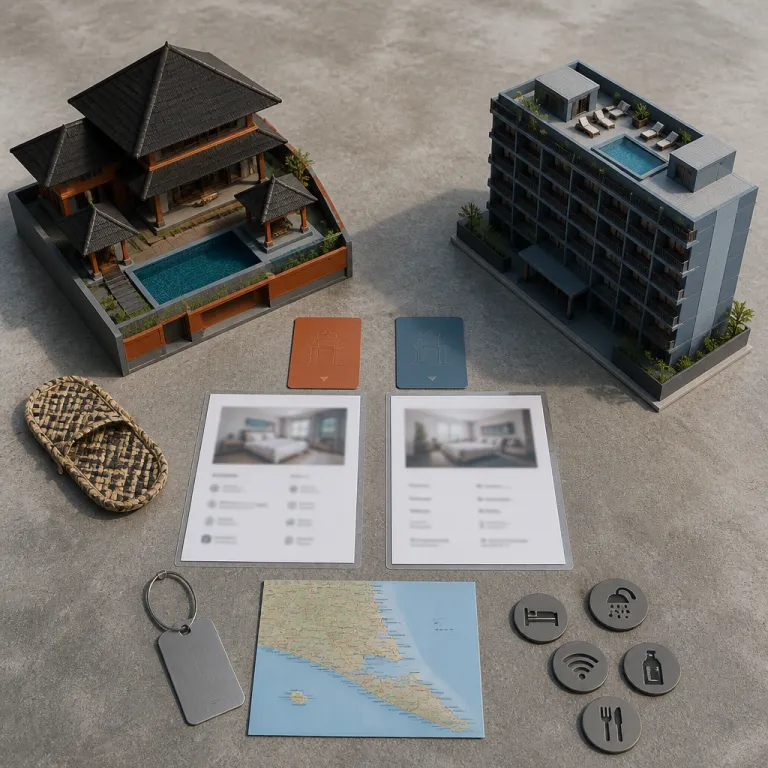
Bali vs Thailand which is better for first‑time hotel bookings
Choosing between Bali and Thailand for a first hotel stay can feel overwhelming. When travellers compare Bali vs Thailand which is better, they usually weigh beaches, culture, food, and how easily each destination fits a limited time. If you are planning your first trip, the way each place feels on the ground will shape everything from your daily rhythm to your budget and how many hotel moves you can realistically handle.
Bali is a single Indonesian island, while Thailand covers an entire country with several major regions and islands. That simple geographic fact already explains why Bali’s compact layout often appeals to travellers who want to minimise transfers and focus on one core area. Thailand–Bali comparisons usually highlight that Thailand wins for variety, yet Bali stands out for cohesion and a sense of narrative during a one week stay, especially if you base yourself in one or two well‑connected neighbourhoods.
Average daily costs also influence whether Bali or Thailand works better for you. According to comparative travel data from 2024 cost‑of‑travel indices such as Numbeo’s Cost of Living Index and BudgetYourTrip’s country summaries, Bali is generally slightly cheaper than Thailand for day‑to‑day expenses. That means that on a typical day you may stretch your budget further in Bali, especially if you choose private villas or midrange hotels, while in Thailand longer distances and more internal flights can raise the overall trip cost.
How the islands feel on arrival and during your stay
Landing in Bali feels like arriving on a self‑contained cultural island where rituals, temples, and rice terraces frame almost every view. Many travellers say that Bali feels more spiritual and cohesive, while Thailand feels more varied and energetic across its different islands and cities. When you compare Bali–Thailand impressions, Bali often suits a slower, more immersive rhythm, whereas Thailand leans toward pace, nightlife, and contrasting regions that can turn one holiday into several mini‑trips.
Thailand offers several distinct hubs, and each island or city can feel like a separate trip. Phuket, Koh Samui, and Chiang Mai all deliver different atmospheres, which makes Thailand better if you enjoy hopping between destinations during one holiday. That same diversity means Thailand–Bali itineraries often require more time and planning, while Bali’s compact geography lets you split your stay between Seminyak, Canggu, and the Ubud–Uluwatu corridor without changing flights, usually with car transfers of 45–90 minutes between hotel zones.
For someone booking a hotel, this difference in how each place feels matters from the first day. In Bali areas such as Canggu and Ubud, you can settle into one property and still reach beach clubs, rice fields, and temples within an hour. In Thailand, you may book one hotel in Phuket for the beach and another in Chiang Mai for culture, which earns Thailand points for variety but adds logistics that not every traveller wants, especially on a short first visit.
Beaches, white sand, and where the coastline truly wins
When travellers ask Bali vs Thailand which is better for beaches, the answer is usually clear. For pure white sand and turquoise water, Thailand offers more and better beaches overall. That means that for postcard‑style bays and easy swimming, Thailand wins the coastal contest most days of the year and feels closer to the classic tropical‑island image many first‑timers imagine.
Phuket and Koh Samui are classic examples of islands where the beach itself becomes the main attraction. Long arcs of white sand, calm bays, and easy swimming conditions make Thailand a fair verdict for travellers who want to spend every day on the shore. Many smaller Thai islands also compete strongly, so for beach purists Thailand better reflects the image people carry before they travel, especially if you prioritise sunbathing over sightseeing.
Bali’s beaches are more varied, with dark volcanic sand in the west and pockets of white sand around Nusa Dua and the Uluwatu coastal cliffs. For surfers and sunset lovers, Bali shines along the Canggu and Uluwatu stretch, where the shore feels wild and the waves define the day. If you prefer dramatic scenery, beach clubs, and clifftop private villas rather than endless flat sand, Bali often wins that more atmospheric category even if Thailand leads the classic beach comparison.
Food, street food, and cafe culture for modern travellers
Food is often the deciding factor when people weigh Bali vs Thailand which is better for a long stay. Thailand is renowned for its diverse and flavorful cuisine, and that reputation comes alive in every Thai city, where street food stalls line almost every street and local food markets stay busy late into the night with dishes like pad kra pao, mango sticky rice, and grilled seafood.
In Thailand’s bigger cities such as Bangkok and Chiang Mai, you can build an entire trip around street food alone. Pad Thai, som tam, grilled skewers, and curries can cost only a few dollars per plate, so on a typical day Thailand excels for variety and intensity of flavour. For travellers who want to eat on the street every evening, choosing Thailand is almost inevitable, especially when you compare the density of stalls with Bali and the way markets become social hubs.
Bali, however, has developed a strong cafe culture that appeals to digital nomads and remote workers who need reliable spaces to spend time with a laptop. In areas like Canggu and Ubud, Bali feels like a global hub where smoothie bowls, espresso bars, and local food warungs sit beside co‑working spaces. If you value long brunches, specialty coffee, and hotel zones surrounded by healthy restaurants, Bali often wins that lifestyle category even if Thailand dominates the pure street food race.
Weather, rainy season, and the best time for your stay
Weather patterns shape whether Bali vs Thailand which is better for your chosen travel season. Both destinations sit in the tropics, yet their rainy season windows and regional microclimates differ enough to affect where Bali or Thailand works better for specific months. If you are booking a hotel around a fixed holiday period, matching that time to the right island or region becomes crucial for avoiding days lost to heavy rain.
Bali has a relatively simple pattern, with a dry season that usually runs from roughly April to October and a rainy season that dominates the remaining months, according to 2023 regional climate summaries from Indonesia’s Meteorology, Climatology, and Geophysical Agency (BMKG). Because the island is compact, you can expect broadly similar conditions whether you stay in Seminyak, Canggu, or the Ubud–Uluwatu area, which makes planning easier for first timers. That predictability often makes Bali attractive for travellers who want to avoid complex weather research and simply enjoy their trip.
Thailand covers several climate zones, so the rainy season can hit Phuket, Koh Samui, and Chiang Mai at different times. On some days one beach region may be sunny while another faces heavy showers, which feels confusing if you only have limited time. For flexible travellers who enjoy chasing the best beach weather across multiple islands, Thailand better rewards that effort, but for a straightforward hotel stay in one place, Bali’s compact geography usually feels more practical.
Digital nomads, private villas, and where remote work really wins
Remote workers often frame the question as Bali vs Thailand which is better for a long stay with a laptop. Bali feels purpose‑built for this lifestyle, with dense cafe culture, co‑working hubs, and private villas that double as quiet offices. For someone booking accommodation with strong Wi‑Fi and a calm environment, Bali performs well across Canggu, Ubud, and the Ubud–Uluwatu corridor, where many villas advertise dedicated desks and fibre‑optic connections.
Many digital nomads choose a villa or hotel in Canggu where they can walk to a cafe, a co‑working space, and the beach in the same day. That compact layout means Bali genuinely saves time, because you avoid long commutes and can structure your trip around short breaks between work sessions. Private villas with pools and dedicated work corners are widely available, so Bali is a common verdict among remote professionals who value comfort and routine.
Thailand, by contrast, spreads its strengths across several destinations, and the country’s larger geography can either help or hinder remote workers. Chiang Mai offers excellent cafe culture and a calm urban feel, while Phuket and Koh Samui provide beach access but sometimes less walkable neighbourhoods for day‑to‑day errands. For nomads who enjoy changing cities every few months, Thailand–Bali combinations work well, yet for a single long booking where everything feels close and manageable, Bali often feels like the easier remote work base even if Thailand offers a broader range of islands and city options.
Key figures when comparing Bali and Thailand
- Average daily travel cost in Bali is around 35 USD per person, based on 2024 backpacker and midrange cost surveys from platforms such as BudgetYourTrip and aggregated user budgets on Numbeo, which helps explain why many budget‑conscious travellers say Bali offers strong overall value.
- Average daily travel cost in Thailand is around 40 USD per person in similar indices, a modest difference that becomes significant over a two week trip and can influence whether Thailand better suits those planning multiple internal flights.
- Thailand offers a larger number of white sand beach destinations than Bali, which supports the expert view that Thailand leads for beaches while Bali stands out for cultural depth.
- Bali’s compact geography means transfer times between major areas such as Seminyak, Canggu, and the Ubud–Uluwatu region are often under two hours by car, whereas distances between Phuket, Koh Samui, and Chiang Mai in Thailand usually require flights.
FAQ – choosing between Bali and Thailand
Which is cheaper, Bali or Thailand, for a hotel based trip ?
Bali is generally cheaper than Thailand for daily expenses, especially when you factor in food and local transport, according to 2023–2024 travel cost comparisons from BudgetYourTrip and Numbeo’s country breakdowns. Hotel prices in both destinations vary widely, yet Bali often offers strong value in private villas and midrange properties. Over a ten day stay, that small daily difference can make Bali the more budget‑friendly choice for many travellers.
Which has better beaches, Bali or Thailand, for swimming and sunbathing ?
Thailand wins the classic beach comparison, with Phuket, Koh Samui, and many smaller islands offering long stretches of white sand and calm water. Bali has beautiful coastal scenery and strong surf, but some beaches have darker sand and stronger waves. If your trip focuses on gentle swimming and sunbathing, Thailand better matches that expectation.
Which destination offers richer cultural experiences during a short stay ?
Bali feels more concentrated in terms of visible culture, with temples, ceremonies, and traditional dance performances woven into daily life. Because the island is compact, you can experience this cultural layer from a single hotel base in Ubud or the Ubud–Uluwatu region. Thailand also offers deep culture, yet it is more spread between Bangkok, Chiang Mai, and rural areas, so Bali often wins for cultural immersion within limited time.
Is Bali or Thailand easier for a first long stay as a digital nomad ?
For a first long stay focused on remote work, Bali is often easier for convenience and lifestyle. Areas such as Canggu and Ubud combine strong cafe culture, co‑working spaces, and private villas within short distances, which makes daily life simpler. Thailand offers excellent hubs like Chiang Mai, but moving between cities and islands adds complexity that not every remote worker wants on their first trip.
Which destination is better for food lovers who enjoy street food ?
Thailand stands out for sheer intensity and variety of street food, with markets and stalls in almost every city and island. Bali offers excellent local food in warungs and a sophisticated cafe culture, yet it cannot match the density of Thai street food scenes. If your ideal day revolves around exploring dishes on the street, Thailand dominates that category, while Bali excels for coffee, brunch, and health‑focused dining around popular hotel areas.
References
thethailandguides.com, Indonesia Ministry of Tourism, Tourism Authority of Thailand, Indonesia’s Meteorology, Climatology, and Geophysical Agency (BMKG) 2023–2024 regional climate summaries, Numbeo Cost of Living Index 2024, BudgetYourTrip 2024 cost‑of‑travel indices